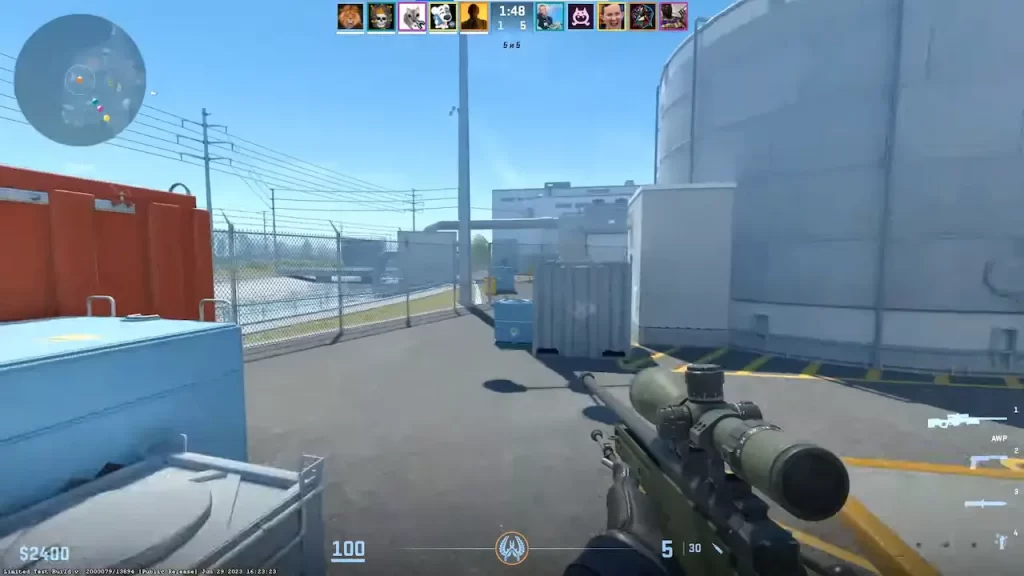
Mastering Bunny Hopping: Tips and Techniques for CS2
Bunny hopping, a crucial movement skill in CS2, allows players to maneuver quickly and unpredictably during gameplay. To master this technique, it’s essential to first understand the basics. Begin with the right key bindings, as they can significantly enhance your control. Many players prefer using W for forward movement, A for left, D for right, and the Spacebar for jumping. Next, initiate the process by jumping while simultaneously holding the forward key. As you land, quickly strafe left or right and time your jumps so that they become fluid rather than sporadic.
Once you’ve got the basic movements down, practice your timing and rhythm. Here are some tips to further improve your bunny hopping:
- Focus on your mouse control: Keep your crosshair steady while using your mouse to strafe left and right seamlessly.
- Utilize the
+jumpcommand: This can help for more consistent jumps by automatically jumping when you hit the ground. - Experiment with different surfaces: Different maps and surfaces can impact your movement speed, so practice on various terrains.
Counter-Strike is a highly competitive first-person shooter that has evolved over the years, with its latest installment known as CS2. Players engage in tactical gameplay, and understanding the ecosystem of in-game items, including cs2 drops, can significantly enhance the gaming experience. With its strategic depth and team-based dynamics, Counter-Strike continues to be a top choice for gamers worldwide.
The Science Behind Bunny Hopping: How to Increase Your Speed in CS2
The technique commonly referred to as bunny hopping in CS2 is not merely a whimsical movement; it is grounded in a solid understanding of game physics. When you execute bunny hops correctly, you can maintain momentum and speed by utilizing a combination of jumping and strafe movement. The key is to time your jumps just right—jumping just as you hit the ground to prevent losing speed. This technique can be learned through practice, and players often find that pairing bunny hopping with precise keyboard movements, like A and D strafe techniques, can yield the best results. By mastering these fundamentals, you can effectively reduce friction with the ground and maximize your potential velocity.
To further enhance your speed using bunny hopping, consider integrating the following tips:
- Practice Your Timing: Ensure you jump and strafe at the right moments to maintain speed.
- Adjust Your Sensitivity: A higher mouse sensitivity can help you make quicker directional changes.
- Use Sound Cues: Listen for the sound of your feet hitting the ground to time your jumps effectively.
- Master the Angle: Aim to land at an angle to maintain your momentum, which can significantly boost your speed.
By consistently applying these strategies, you can become a more agile player in CS2, outpacing your opponents and gaining a tactical advantage.
Common Mistakes to Avoid When Bunny Hopping in CS2
Bunny hopping is a crucial movement technique in Counter-Strike 2 (CS2) that can dramatically enhance your gameplay, but many players make common mistakes that hinder their performance. One of the most prevalent errors is not timing their jumps correctly. When bunny hopping, players must synchronize the jump with the strafe key to maintain speed. Failing to do this can result in a loss of momentum and make it difficult to navigate the map efficiently. Remember to practice your timing in a controlled environment to perfect this essential skill.
Another mistake players often make is mistaking bunny hopping for simply holding down the jump key. In reality, effective bunny hopping requires precise mouse movement and alternation between the strafe keys (A and D). Additionally, some players neglect to check their settings, resulting in unfavorable configurations that impede their ability to perform the technique fluidly. To avoid these pitfalls, ensure that your key bindings and sensitivity settings are optimal for bunny hopping, and dedicate time to drills that focus on mastering the mechanic.